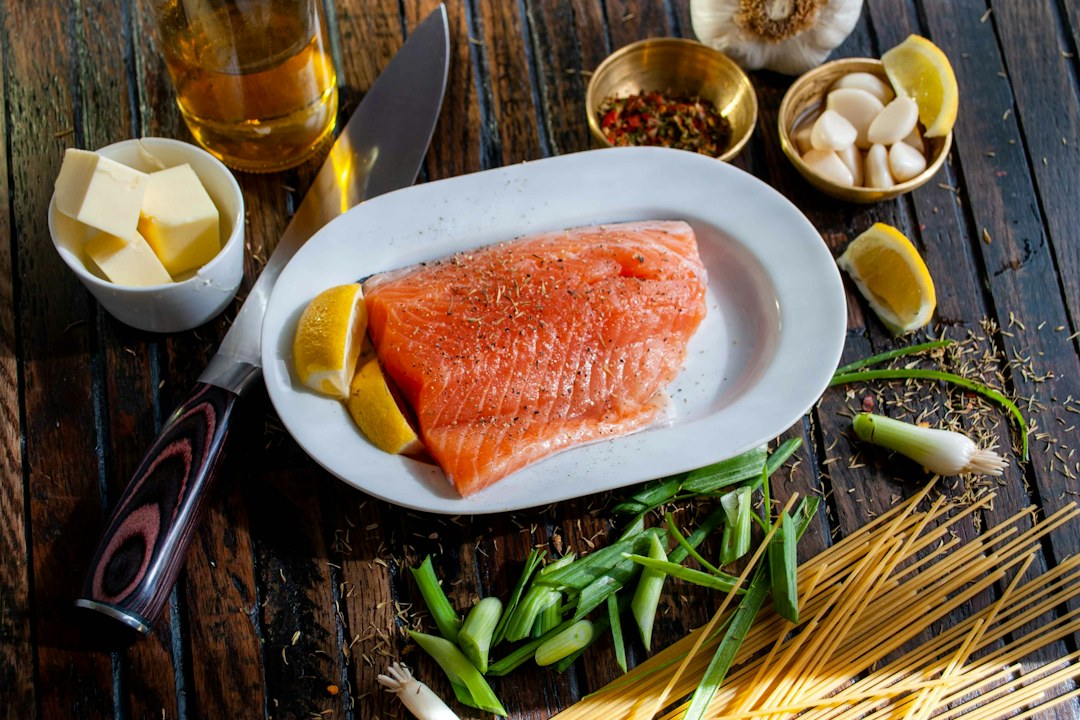
Cooking salmon straight from frozen? Use individually frozen fillets around 1 inch thick. Start them plain at 390°F for 5 minutes, then blot away surface moisture and season. Check each fillet separately with a thermometer; the recipe card and thickness guide explain when to start checking. If your salmon is already thawed and you want bite-size pieces, use the lemon dill salmon bites method instead.

Why the two-stage frozen-salmon method works
Oil and dry seasonings slide off a hard, icy surface. Air frying the plain fillets for 5 minutes loosens the ice glaze and softens the top just enough to blot dry. The salmon can then be seasoned evenly for the remaining cooking time.
Keeping each fillet separate is essential. If the package is frozen into one solid block, thaw it in the refrigerator only until the pieces can be separated safely. This method is not intended for breaded, stuffed, preseasoned, or sauce-covered products with their own package directions.
For fresh salmon pieces, try Air Fryer Lemon Dill Salmon Bites. The Creamy Tuscan Salmon Skillet offers a stovetop option, and Air Fryer Frozen Green Beans with Lemon Parmesan make a convenient side.
Air Fryer Frozen Salmon with Lemon Garlic Butter
Prep: 5 minutes Cook: 15 minutes Total: 20 minutes Yield: 4 servings
Ingredients
- 4 individually frozen salmon fillets, 5 to 6 ounces each and about 1 inch thick
- 1 tablespoon olive oil
- 3/4 teaspoon garlic powder
- 1/2 teaspoon smoked paprika
- 1/2 teaspoon fine salt
- 1/4 teaspoon black pepper
- 2 tablespoons unsalted butter, melted
- 1 small garlic clove, finely grated
- 1 tablespoon fresh lemon juice
- 1 tablespoon chopped fresh parsley or dill
- Lemon wedges, for serving
Directions
- Preheat the air fryer to 390°F for 3 minutes if your model recommends preheating. Lightly oil the clean basket.
- Remove the frozen fillets from all packaging. Rinse away loose surface ice under cold water and pat the outside as dry as possible. Arrange the fillets skin-side down, if applicable, in one layer with space between them.
- Air fry the unseasoned frozen salmon at 390°F for 5 minutes. The surface should be thawed enough to accept oil and seasoning.
- Carefully open the basket. Blot any visible moisture from the top of each fillet. Brush with olive oil, then sprinkle with garlic powder, paprika, salt, and black pepper.
- Return the basket and cook for 7 to 10 minutes more. Begin checking thin fillets after 7 minutes and remove pieces individually as they finish. Salmon is safely cooked when the thickest part reaches 145°F and the flesh is opaque and flakes with gentle pressure.
- While the salmon finishes, stir the melted butter, fresh garlic, lemon juice, and herbs together.
- Transfer the cooked salmon to plates. Spoon the lemon garlic butter over the hot fillets and serve with lemon wedges.
Timing frozen salmon by thickness
A thin 3/4-inch fillet may need about 11 to 13 minutes total, including the first stage. A 1-inch fillet commonly needs 12 to 15 minutes total. A thick center-cut portion can require 16 to 19 minutes. Air-fryer wattage, basket shape, salmon species, skin, and the amount of ice glaze all affect the result.
Use time only as a cue to begin checking. Insert an instant-read thermometer horizontally into the thickest portion so the sensing tip reaches the center. If the outside is browning before the center is ready, reduce the temperature to 350°F and continue in 1- to 2-minute increments.
Tips for moist salmon that releases cleanly
- Separate the fillets: Air cannot circulate through a frozen block, so it will cook unevenly.
- Remove surface ice: A heavy glaze creates steam and delays browning.
- Season after five minutes: This keeps the oil and spices on the fish instead of in the basket.
- Cook skin-side down: Skin helps protect the bottom and usually releases more easily when left undisturbed.
- Check pieces separately: Remove a thin tail piece while thicker portions continue cooking.
- Add butter after cooking: Finishing with lemon butter keeps garlic from scorching in the air fryer.
Useful flavor variations
- Honey Dijon: Replace the finishing butter with 1 tablespoon Dijon, 1 tablespoon honey, 1 tablespoon melted butter, and 1 teaspoon lemon juice.
- Maple soy: Mix 1 tablespoon maple syrup, 2 teaspoons low-sodium soy sauce, and 1 teaspoon sesame oil. Brush on during the final 2 minutes.
- Cajun: Replace the paprika, salt, and pepper with 1 1/2 teaspoons salt-free Cajun seasoning, then salt lightly to taste.
- Italian herbs: Use dried oregano in place of smoked paprika and finish with parsley, lemon, and grated Parmesan.
- Dairy-free: Use olive oil instead of butter in the finishing sauce.
Storage and reheating
Refrigerate cooked salmon in a shallow covered container within 2 hours and use it within 3 to 4 days. Cool it before closing the container so trapped steam does not make the surface wet. Reheat only the portion you intend to eat and bring leftovers to 165°F.
For the air fryer, reheat at 300°F for 3 to 5 minutes, checking early to limit drying. In the microwave, cover loosely and use 50% power in short intervals. A teaspoon of water or lemon butter beside the fish can help create gentle steam.
Cooked salmon can be frozen for up to 2 months for best texture. Wrap portions tightly after they cool, thaw overnight in the refrigerator, and reheat gently. Freezing does not improve texture, so refrigerating is preferable when the salmon will be eaten within a few days.
Frequently asked questions
Can I air fry salmon directly from frozen?
Yes, if the fillets are plain, individually frozen, and can be arranged in one layer. Use the first five minutes to remove surface ice before seasoning.
Do I need to flip the salmon?
No. Fillets cook evenly without flipping, and skin-on portions are easiest to handle when left skin-side down. Check the center temperature rather than turning the fish.
What is the white material on cooked salmon?
It is albumin, a salmon protein that becomes visible as the fish cooks. It is safe to eat. A large amount can indicate that the outside heated quickly, but it does not mean the fish is unsafe.
Can I use foil or parchment?
Use only accessories approved by the air-fryer manufacturer. Never place loose paper in the fryer during preheating because moving air can lift it toward the heating element. A lightly oiled bare basket gives the best circulation.
What if my fillets are much thicker?
Lower the temperature to 350°F after the initial stage and allow extra time. Check in short intervals. Thaw unusually thick portions in the refrigerator when possible for more even cooking.
Estimated nutrition
Estimated per serving: 330 calories, 1 g carbohydrate, 34 g protein, 21 g fat, 7 g saturated fat, 0 g fiber, 0 g sugar, and 410 mg sodium. Values vary with salmon species, fillet size, and the amount of butter served.
Leave a Reply