These garlic-sage roasted butternut squash slices are a savory answer to the usual sweet squash side. The slices get golden at the edges in a hot oven, while garlic and sage go on near the end so they flavor the squash without burning. It works beside roast chicken, a bean-based dinner, or a holiday main.
The key is even thickness. Cut the neck into ½-inch rounds and the seeded bulb into ½-inch half-moons, then spread them on a large sheet pan with room between pieces. If the pan is crowded, the squash steams instead of browning. You can prep the pieces a day ahead and roast just before serving.
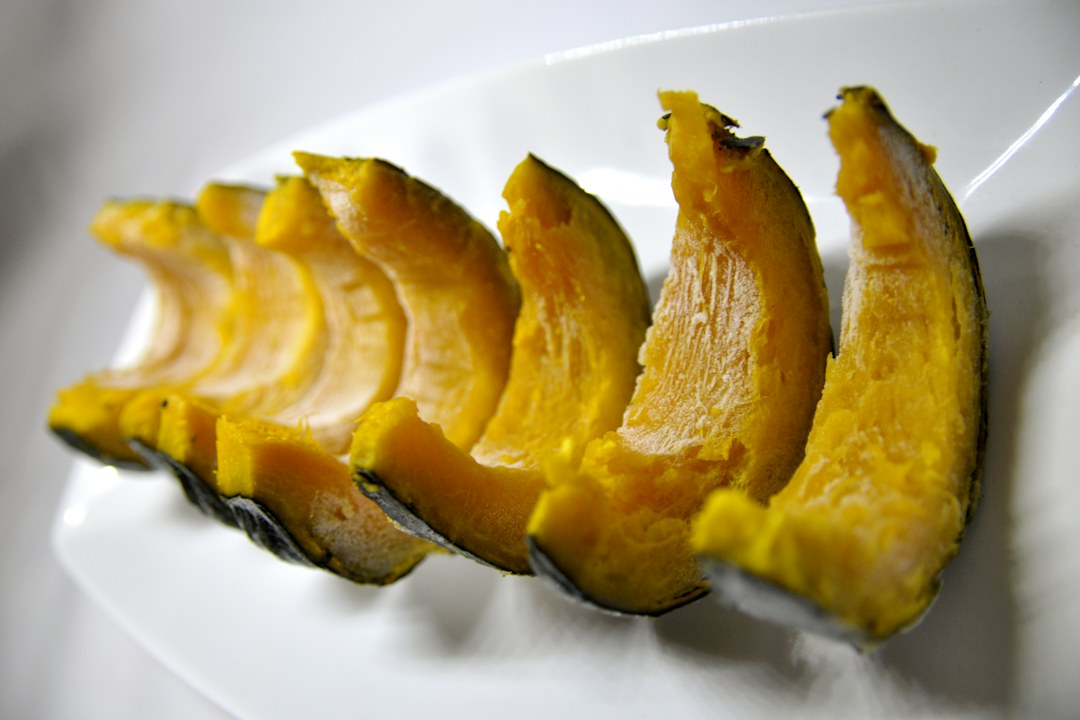
Prep: 15 minutes Cook: 30 minutes Total: 45 minutes Yield: 4 side servings
Ingredients
- 1 medium butternut squash (about 2 pounds whole)
- 2 tablespoons olive oil, divided
- ¾ teaspoon kosher salt
- ¼ teaspoon freshly ground black pepper
- 2 garlic cloves, finely minced
- 1 tablespoon finely chopped fresh sage (about 5 to 6 leaves)
- 1 teaspoon lemon juice, for finishing (optional)
Directions
- Heat the oven to 425°F. Line a large rimmed baking sheet with parchment. Trim both ends of the squash. Peel with a sturdy vegetable peeler, separate the neck from the bulb, halve the bulb, and scoop out the seeds.
- Slice the neck into ½-inch rounds and the bulb into ½-inch half-moons. Aim for pieces of similar thickness so they finish together. Pat the pieces dry if they are damp.
- Toss squash with 1½ tablespoons of the olive oil, salt, and pepper. Arrange in one layer on the sheet, leaving a little space between slices. Use two sheets if needed.
- Roast for 18 to 20 minutes. Flip the slices. Stir the garlic and sage into the remaining ½ tablespoon oil, then brush or spoon a little onto each slice. Roast 8 to 10 minutes more, until the thickest pieces are fork-tender and the edges are browned.
- Let stand 3 minutes. Add the lemon juice, if using, and serve warm. Taste before adding extra salt.
Practical tips and variations
- Safe cutting: Use a stable board and a sharp chef’s knife. If the squash is especially firm, pierce the skin several times and microwave for 2 to 3 minutes, then let it cool enough to handle before peeling and cutting.
- Do I have to peel it? Butternut skin is edible after long cooking but can stay chewy on slices; peeling gives the most reliable texture here.
- Garlic timing: Adding minced garlic at the start of a 425°F roast can make it bitter. Add it when you flip the squash instead.
- Fresh or dried sage: Use 1 teaspoon crumbled dried sage in place of the tablespoon of fresh sage. Mix it with the finishing oil.
- For sweetness: If you want a sweet-savory variation, drizzle 1 teaspoon maple syrup over the full pan after roasting. The main recipe does not need it.
Common questions
How thick should butternut squash slices be?
About ½ inch. Thinner slices can dry or scorch at the edges before the center is tender; thicker ones need more oven time.
Can I roast the squash ahead of time?
Yes. Peel and slice up to a day ahead and refrigerate covered. For the best browned edges, roast shortly before serving. Fully cooked leftovers can be reheated in a hot oven.
What if the squash is not browning?
Check that the oven is fully heated and the pan is not crowded. Move the slices farther apart or use a second sheet. Avoid stacking them.
Storage and reheating
Cool promptly and refrigerate in a covered container within 2 hours for up to 4 days. Reheat spread out on a baking sheet at 400°F for about 8 to 10 minutes, until hot, or warm in a skillet. The microwave works, but the edges will soften. Freezing is possible for up to 2 months, though thawed slices lose some of their firm texture.
Estimated nutrition
Per side serving: approximately 145 calories, 2 g protein, 22 g carbohydrate, 7 g fat, 4 g fiber, and 300 mg sodium. This is an estimate based on four portions and varies with squash size and how much oil remains on the pan.
Helpful kitchen gear
As an Amazon Associate, MealMadeBright earns from qualifying purchases.
Leave a Reply