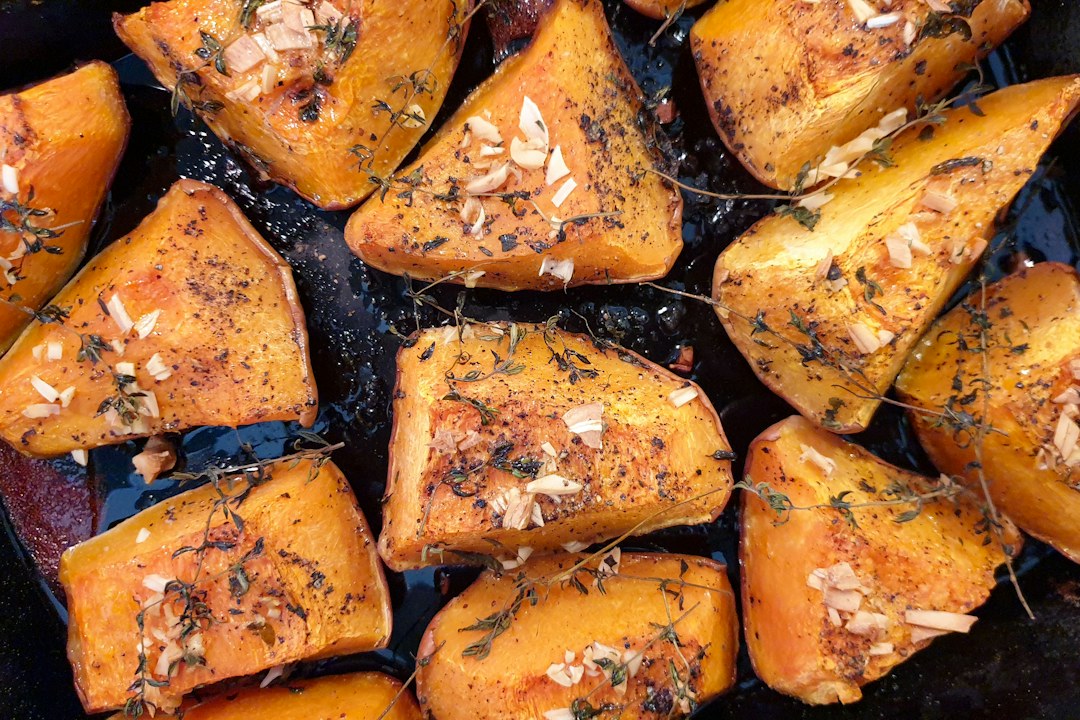
These air fryer butternut squash cubes have tender centers, browned corners, and a light maple-sage glaze. The air fryer handles a four-serving fall side in about 18 minutes while the oven stays free for the main dish.
Uniform 3/4-inch cubes and a loose single layer matter more than adding extra oil. Toss the maple syrup on near the end so the natural sugars caramelize without scorching before the squash is tender.

Air Fryer Butternut Squash Cubes with Maple and Sage
Prep: 15 minutes Cook: 18 minutes Total: 33 minutes Yield: 4 servings
Ingredients
- 1 1/2 pounds peeled and seeded butternut squash, cut into 3/4-inch cubes (about 4 cups)
- 1 tablespoon olive oil
- 1/2 teaspoon garlic powder
- 1/2 teaspoon fine salt
- 1/4 teaspoon black pepper
- 1/2 teaspoon dried rubbed sage or 1 1/2 teaspoons chopped fresh sage
- 1 tablespoon pure maple syrup
- 1 tablespoon toasted pumpkin seeds, optional
Directions
- Preheat and cut: Preheat the air fryer to 380°F if the manufacturer recommends preheating. Cut the squash into uniform 3/4-inch cubes and pat them dry.
- Season: Toss the squash with the olive oil, garlic powder, salt, pepper, and sage until every piece is lightly coated.
- Load the basket: Arrange the squash in one loose layer in the air-fryer basket. Cook in two batches if pieces are stacked more than one cube deep.
- Air-fry: Air-fry for 13 to 15 minutes, shaking the basket after 7 minutes, until the cubes are nearly tender and browned at the corners.
- Add maple and finish: Transfer the hot squash to a bowl, toss with the maple syrup, and return it to the basket. Cook for 2 to 4 minutes more, watching closely, until tender and lightly caramelized. Top with pumpkin seeds if using.
Estimated nutrition: 150 calories, 2 g protein, 29 g carbohydrate, 4 g fat, 5 g fiber, and 300 mg sodium per serving. Nutrition is an estimate and changes with cube size, squash yield, oil retained, maple syrup, and optional toppings.
How to cut butternut squash into even cubes
Trim the stem and base so the squash stands securely. Separate the narrow neck from the rounded bulb, peel both pieces with a sturdy vegetable peeler, and halve the bulb to scoop out the seeds. Cut slabs, then strips, then 3/4-inch cubes. Keep fingers curled away from the knife and stabilize each flat cut surface before continuing.
Precut fresh squash is a useful shortcut. Check for firm, dry cubes without slimy edges and trim oversized pieces so the batch cooks evenly. Four cups of cubes generally weigh about 1 1/2 pounds, but shape and density vary.
Why the maple syrup goes in near the end
Maple syrup contains sugars that brown much faster than raw squash softens. Adding it for the full cook can leave bitter dark spots while the centers remain firm. Oil and dry seasonings go on first; the maple coats the nearly tender cubes for only the final few minutes.
Shake the basket before adding maple so different sides face the hot circulating air. Once glazed, watch closely. Small cubes or an especially powerful air fryer may need only 2 additional minutes.
How to get browned edges instead of steamed squash
Dry the cubes after cutting and use just enough oil for a thin coat. Excess moisture and crowding trap steam. If your basket is smaller than about 6 quarts, two quick batches brown better than one crowded batch.
Do not cover the entire basket with solid foil. It restricts airflow and can lift toward the heating element. If you use a manufacturer-approved liner for cleanup, make sure food weighs it down and expect slightly less browning where the squash touches it.
Common questions
Can I use frozen butternut squash?
Yes, but it usually releases more water and browns less evenly. For the best texture, thaw it in the refrigerator and pat it very dry. If cooking from frozen, spread the cubes loosely, skip the maple at first, and allow several extra minutes before checking tenderness.
Do I need to peel butternut squash?
For small air-fried cubes, peeling gives the most even, tender texture. The skin is edible after thorough cooking, but it can remain chewy around small pieces. A whole or halved preparation is better when you want to cook first and scoop out the flesh later.
What temperature works best?
380°F balances browning with enough time for 3/4-inch centers to soften. At 400°F, corners may darken before larger pieces are tender. Air fryers vary, so begin checking early and use a fork rather than the timer alone.
Can I make this savory instead of sweet?
Omit the maple syrup and finish with 1 tablespoon grated Parmesan or 2 teaspoons lemon juice. Smoked paprika, cumin, curry powder, or chopped rosemary also work; start with 1/2 teaspoon so the squash remains the main flavor.
Can I double the recipe?
Yes, but cook in batches. Doubling the quantity in one basket creates a deep layer that cooks unevenly. Keep the first batch warm in a 200°F oven while the second cooks, then glaze them together.
Variations
- Maple cinnamon: Replace sage and garlic with 1/2 teaspoon cinnamon and a pinch of nutmeg.
- Smoky: Omit maple and sage; add 1/2 teaspoon smoked paprika and a pinch of cayenne.
- Parmesan herb: Omit maple, use Italian seasoning, and toss with 2 tablespoons finely grated Parmesan after cooking.
- Holiday finish: Add 1/3 cup dried cranberries and 1/4 cup chopped toasted pecans after air-frying.
Storage and reheating
Cool leftovers promptly and refrigerate in a covered container for up to 4 days. Reheat in the air fryer at 350°F for 4 to 6 minutes, shaking once, until steaming hot. A microwave works for 60 to 90 seconds but softens the browned edges.
Freeze cooled cubes in a single layer, then transfer to an airtight container for up to 2 months. Reheat from frozen at 350°F until hot, allowing extra time; previously frozen squash will be softer than a fresh batch.
For an oven-roasted version with a different shape and seasoning, see the garlic-sage roasted butternut squash slices. The air fryer acorn squash with maple and cinnamon is another fall side with edible skin.
Useful kitchen gear
Amazon Associate disclosure: MealMadeBright is a participant in the Amazon Services LLC Associates Program. If you buy through the link below, MealMadeBright may earn a commission at no extra cost to you.
A reusable air-fryer silicone liner can simplify cleanup when it fits the basket and the appliance manufacturer permits it; never preheat an empty liner.
Leave a Reply