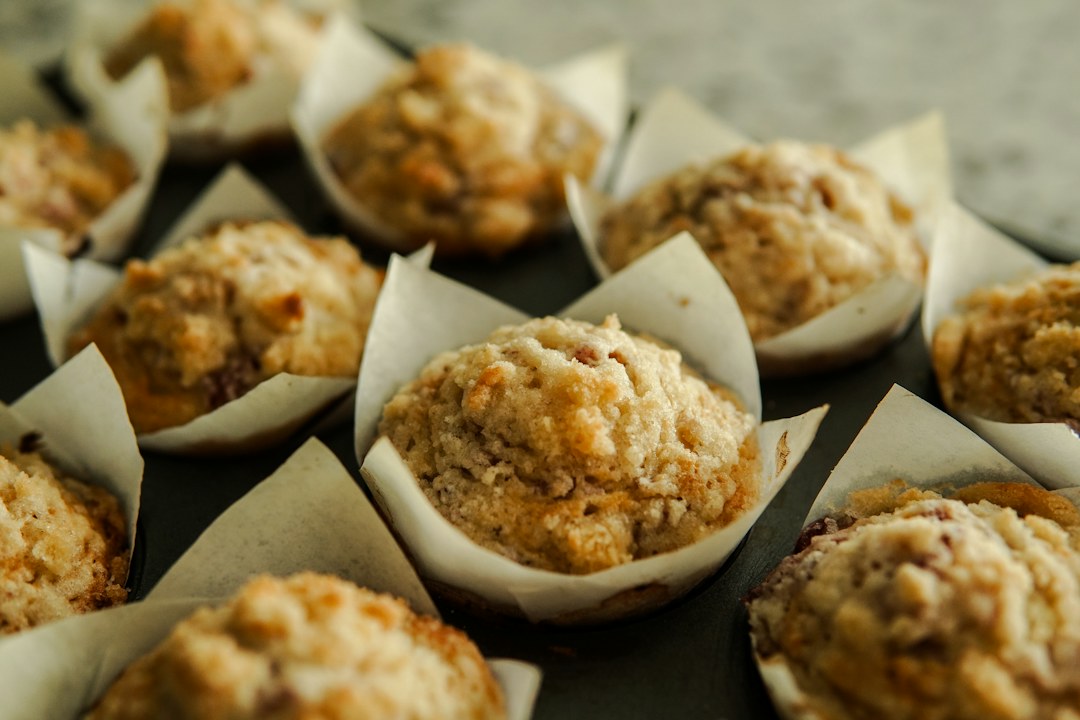
These cranberry orange Greek yogurt muffins are bright with real orange zest, pleasantly tart from whole cranberries, and tender without needing a heavy glaze. The batter works with fresh cranberries when they are in season and frozen cranberries the rest of the year, so there is no need to wait for a short holiday window.
Greek yogurt adds moisture and a little protein while keeping the crumb soft. Orange zest carries more concentrated citrus aroma than juice alone, and rubbing it into the sugar releases the fragrant oils before the batter is mixed. The result is a practical breakfast or brunch muffin that freezes well and uses one standard 12-cup pan.

Why this cranberry-orange muffin method works
Cranberries bring plenty of acidity, so the recipe uses both baking powder and a small amount of baking soda for a reliable rise and balanced flavor. The batter is deliberately thick enough to suspend the berries instead of letting them collect at the bottom. Tossing the berries with a tablespoon of flour gives the wet surfaces a light coating and makes them easier to distribute.
The mixing order matters. Whisking the wet ingredients until smooth prevents pockets of yogurt, while folding the flour in gently limits gluten development. Stop when only a few flour streaks remain; the last folds happen when the cranberries go in. A standard 375°F oven gives the centers time to set before the edges become dry.
If you enjoy fruit-forward breakfasts, try Apple Cinnamon Cottage Cheese Muffins or Lemon Blueberry Yogurt Loaf. For another cranberry-orange holiday option, the No-Bake Cranberry Orange Cheesecake Bars use the same seasonal flavor pairing in dessert form.
Cranberry Orange Greek Yogurt Muffins
Prep: 15 minutes Cook: 20 minutes Total: 35 minutes Yield: 12 muffins
Ingredients
- 2 cups (240 g) all-purpose flour, plus 1 tablespoon for the cranberries
- 2 teaspoons baking powder
- 1/2 teaspoon baking soda
- 1/2 teaspoon fine salt
- 3/4 cup granulated sugar
- 1 tablespoon finely grated orange zest, from about 1 large orange
- 2 large eggs, at room temperature
- 3/4 cup plain Greek yogurt
- 1/3 cup neutral oil, such as avocado or canola oil
- 1/3 cup fresh orange juice
- 1 teaspoon vanilla extract
- 1 1/2 cups fresh or frozen cranberries, not thawed if frozen
- 1 tablespoon coarse sugar for topping, optional
Directions
- Heat the oven to 375°F. Line a standard 12-cup muffin pan with paper liners or lightly grease the cups.
- In a medium bowl, whisk 2 cups flour, the baking powder, baking soda, and salt until evenly combined.
- In a large bowl, rub the granulated sugar and orange zest together with your fingertips for about 30 seconds, until the sugar smells strongly of orange and looks slightly damp.
- Whisk the eggs, Greek yogurt, oil, orange juice, and vanilla into the orange sugar until smooth.
- Add the dry mixture to the wet mixture. Fold with a flexible spatula just until a few flour streaks remain. Do not beat the batter.
- Toss the cranberries with the reserved 1 tablespoon flour. Gently fold them into the batter just until evenly distributed.
- Divide the thick batter evenly among the 12 cups; each cup will be nearly full. Sprinkle with coarse sugar, if using.
- Bake for 18 to 22 minutes, rotating the pan once after 10 minutes. The muffins are done when the tops spring back and a toothpick inserted away from a cranberry comes out with a few moist crumbs.
- Cool in the pan for 5 minutes, then transfer the muffins to a wire rack. Cool at least 15 minutes before serving so the crumb can set.
Practical tips for tall, tender muffins
- Measure flour carefully: Spoon flour into the measuring cup and level it, or weigh 240 grams. Scooping directly from a compacted bag can add enough flour to make the muffins dry.
- Use only the orange part of the peel: The white pith beneath the zest tastes bitter. A fine grater removes the aromatic outer layer without digging too deeply.
- Keep frozen berries frozen: Thawing releases juice that can streak and loosen the batter. Fold frozen cranberries in directly and allow the upper end of the baking range if needed.
- Check between berries: A toothpick pushed through a cranberry will look wet even when the muffin is baked. Test in the crumb near the center instead.
- Cool on a rack: Leaving the muffins in the hot pan traps steam around the sides. Move them after five minutes for a tender surface rather than a damp one.
Fresh, frozen, or dried cranberries
Fresh and frozen whole cranberries can be used in the same 1 1/2-cup amount. Sort fresh berries and discard any that are soft or shriveled. Do not thaw frozen berries. Because frozen fruit lowers the batter temperature, the muffins may need two additional minutes.
Dried cranberries are sweeter and less juicy, so they are not a one-for-one substitute. Use 1 cup dried cranberries and reduce the granulated sugar to 2/3 cup if you prefer a less-sweet muffin. Soaking the dried fruit in warm orange juice for 10 minutes, then draining and drying it, gives a softer texture.
Useful variations
- Whole-wheat option: Replace up to 1 cup of the all-purpose flour with white whole-wheat flour. The muffins will be slightly heartier but should remain tender.
- Nutty crunch: Fold in 1/2 cup chopped pecans or walnuts with the cranberries.
- Small orange glaze: Whisk 1/2 cup confectioners’ sugar with 1 to 2 teaspoons orange juice and drizzle it over completely cooled muffins. The nutrition estimate below does not include glaze.
- Less added sugar: Reduce the granulated sugar to 2/3 cup. The berries will taste more tart and the tops may brown a little less.
- Mini muffins: Fill 24 greased mini cups and begin checking after 10 minutes. Bake only until the centers spring back.
Storage and freezing
Let the muffins cool completely before storing so condensation does not make the tops sticky. Keep them in an airtight container at room temperature for up to 2 days, placing a paper towel beneath and above them to absorb excess moisture. For longer storage, refrigerate for up to 5 days and bring to room temperature before serving.
To freeze, place the cooled muffins on a tray until firm, then move them to a freezer bag and press out the excess air. Freeze for up to 2 months for best quality. Thaw overnight in the refrigerator or at room temperature for about an hour. A 10- to 15-second microwave warm-up restores a softer texture; avoid overheating, which can toughen the crumb.
Frequently asked questions
Can I use nonfat Greek yogurt?
Yes. Nonfat, 2%, and whole-milk Greek yogurt all work. Whole-milk yogurt gives the richest crumb, while nonfat yogurt makes it slightly leaner. Use Greek-style yogurt rather than a thin regular yogurt so the batter stays thick enough to hold the berries.
Why are my muffins dense?
The most common causes are too much flour or overmixing after the flour is added. Measure accurately, fold gently, and stop as soon as the berries are distributed. Also check that the baking powder and baking soda are not past their best-use dates.
Can I make the batter the night before?
It is better to bake the muffins soon after mixing because the leaveners begin reacting with the yogurt and orange juice. For a head start, combine the dry ingredients and measure the wet ingredients separately, refrigerate the wet mixture, and fold everything together in the morning.
Do I need to chop the cranberries?
No. Whole cranberries create tart pockets and reduce prep. If you want smaller pieces in every bite, pulse the berries two or three times in a food processor; do not process them into a wet puree.
Estimated nutrition
Estimated per muffin: 215 calories, 32 g carbohydrate, 4 g protein, 8 g fat, 1.5 g saturated fat, 1 g fiber, 14 g sugar, and 190 mg sodium. This is an estimate calculated from typical ingredients and excludes optional coarse sugar or glaze; brands and substitutions will change the values.
Leave a Reply