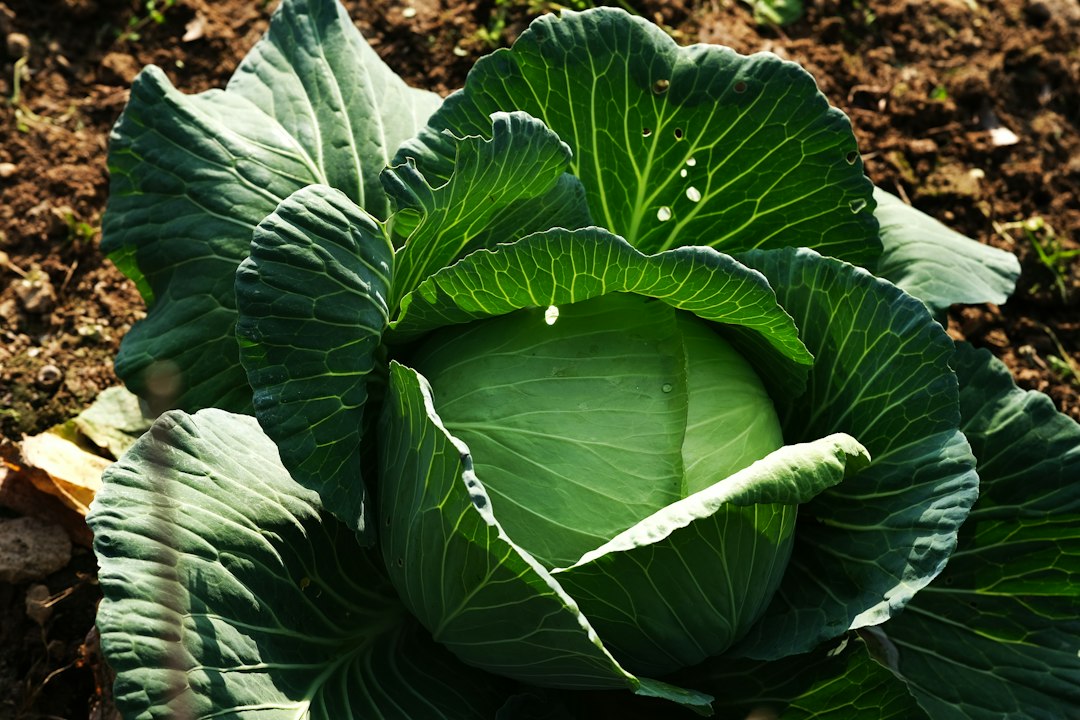
These roasted cabbage wedges with garlic and Parmesan turn an inexpensive head of green cabbage into a savory side with browned cut faces, soft inner leaves, and a light cheese finish. Garlic powder seasons the wedges without the scorching that minced garlic can suffer during a long roast. Lemon zest adds brightness at the end.
The method depends on two small details: leave enough core attached to hold each wedge together, and give the wedges space on the sheet pan. The recipe makes eight wedges, enough for six side-dish portions, and uses a hot oven for about 40 minutes. It is a useful side for fish, chicken, beans, or a simple weeknight supper.

Roasted Cabbage Wedges with Garlic and Parmesan
Prep: 15 minutes Cook: 40 minutes Total: 55 minutes Yield: 6 side-dish servings (8 wedges)
Ingredients
- 1 small firm green cabbage (about 2 pounds or 900 g before trimming)
- 3 tablespoons olive oil, divided
- 3/4 teaspoon garlic powder
- 1/2 teaspoon fine salt
- 1/4 teaspoon ground black pepper
- 1/2 cup (40 g) finely grated Parmesan cheese
- 1 teaspoon finely grated lemon zest
- 1 tablespoon chopped parsley, optional for serving
Directions
- Heat the oven: Heat the oven to 425°F with a rack in the middle. Lightly coat a large rimmed metal sheet pan with 1 tablespoon of the olive oil.
- Cut stable wedges: Remove damaged outer cabbage leaves, rinse the cabbage, and dry well. Trim only the dried base of the stem. Cut through the core into quarters, then halve each quarter to make eight wedges, leaving a section of core attached to every wedge.
- Season both sides: Mix the remaining 2 tablespoons oil with the garlic powder, salt, and pepper. Brush over both cut faces of each wedge. Arrange the wedges on one cut side on the pan, leaving space between them.
- Roast and turn: Roast for 20 minutes. Use a wide spatula to turn each wedge onto its other cut side, supporting the core so the leaves stay together. Roast for another 10 to 15 minutes, until the thickest part is nearly fork-tender.
- Add the Parmesan: Sprinkle the Parmesan over the wedges, pressing it lightly against the cabbage rather than scattering it over the bare pan. Roast for 5 minutes more, until the cheese is golden and the core is easily pierced with a fork. Total roasting time is about 35 to 40 minutes.
- Finish and serve: Transfer to a serving platter. Sprinkle with lemon zest and optional parsley. Cut away any very firm piece of core at the table if desired, and serve warm.
Estimated nutrition: 120 calories, 4 g protein, 10 g carbohydrate, 9 g fat, 4 g fiber, and 300 mg sodium per 1/6 of recipe, without optional serving extras. Nutrition is an estimate; brands, draining, oil absorption, and portion sizes affect the values.
How to cut cabbage wedges that stay together
Set the cabbage stem-side down on a stable cutting board and cut straight through the center. Cut each half through the core into quarters, then halve each quarter again. The core is the anchor for the layers. Removing the entire core before roasting makes the leaves separate and exposes thin edges to the heat too soon.
A small, tightly packed green cabbage is easiest to manage. If your head weighs closer to 3 pounds, use two sheet pans or roast only part of it. Crowding a single pan traps steam, which gives you soft cabbage without much browning. Wedges should sit on a broad cut face and have visible space between them.
Getting browned edges and a tender center
- Dry the cabbage. Water on the leaves delays browning. Pat the cut surfaces with a clean towel after rinsing.
- Use a metal pan. A large rimmed metal sheet pan transfers heat to the cut faces more directly than a deep casserole dish.
- Oil the pan and the cabbage. The measured oil prevents sticking and helps season the layers without making the wedges greasy.
- Add cheese near the end. Parmesan needs only a few minutes to color. Adding it at the start can leave burnt cheese on the pan before the core softens.
- Check the core. Brown outer leaves alone do not prove the center is tender. A fork should slide through the thick base without much resistance.
Common questions and substitutions
Why is the outside burning while the center is hard?
The wedges may be too thick, uneven, or from a very large cabbage. If the cut faces are already dark but the base remains firm, reduce the oven to 375°F, cover loosely with foil, and cook for another 5 to 10 minutes before adding the cheese. Pull any detached thin leaves off the pan if they darken early. Brown edges are welcome; blackened, bitter leaves are not the goal.
Can I use red cabbage or savoy cabbage?
Red cabbage can be cut the same way but is denser and may need 5 to 15 minutes longer. Add the Parmesan only once the core is nearly tender. Savoy cabbage has looser, thinner leaves that can brown faster; check it after 15 minutes and handle it gently. The card timing is for a small firm green cabbage.
Can I use fresh garlic?
Yes, but add it late. Omit the garlic powder and mix two finely grated garlic cloves with 1 teaspoon additional oil. Brush that mixture over the wedges when adding the Parmesan for the last 5 minutes. This reduces the chance of bitter scorched garlic. The extra oil changes nutrition slightly.
Can I make it dairy-free?
Omit the Parmesan and finish with the lemon zest, parsley, and 1 tablespoon toasted sunflower seeds. A dairy-free Parmesan-style topping is another option, but watch closely because its browning behavior depends on the brand. The base recipe contains milk through the cheese.
Is Parmesan suitable for a vegetarian meal?
Some Parmesan is made with animal rennet. If you need a vegetarian side, choose a hard cheese labeled vegetarian or made with microbial rennet. Check packaged cheese and seasonings for gluten-free labeling if cross-contact is a concern. The cabbage itself contains no gluten.
Can I roast the wedges ahead?
Freshly roasted wedges have the best edge texture, but you can cut and refrigerate the raw wedges in a covered container up to 1 day ahead. Brush with oil and season just before roasting. For a dinner with several oven dishes, roast the cabbage first and reheat it briefly on a sheet pan rather than holding it in a covered bowl, where steam softens the edges.
What to serve alongside
Pair the wedges with Baked Lemon Herb Cod, or serve them alongside a warm bowl of beans. For another cabbage dinner with a different method, make Ground Beef and Cabbage Skillet Without Rice. If you are planning several vegetable sides, Garlic Mashed Cauliflower Without Potatoes gives a softer contrast to the browned cabbage.
Storage and reheating
Refrigerate leftovers in a shallow covered container within 2 hours, or within 1 hour if the surrounding temperature is above 90°F. Keep the refrigerator at 40°F or below and use within 3 to 4 days. For the best texture, reheat on a sheet pan at 375°F for about 10 to 15 minutes, until the center reaches 165°F. Cover loosely if the cheese starts to darken before the wedges are hot.
You can microwave a portion in short intervals, but the browned edges will soften. Freezing is safe for properly handled cooked cabbage, although thawed wedges release water and lose their roasted texture; refrigeration is preferable for this recipe. See USDA leftover storage and reheating guidance.
Helpful kitchen gear
Amazon Associate disclosure: As an Amazon Associate, MealMadeBright earns from qualifying purchases.
A large rimmed metal sheet pan leaves room for the wedges to brown. Check your oven dimensions and use an existing sturdy pan if it gives the cabbage enough space.
Browse rimmed half-sheet pans on Amazon. Compare dimensions, materials, care instructions, and current reviews before choosing equipment.
Leave a Reply