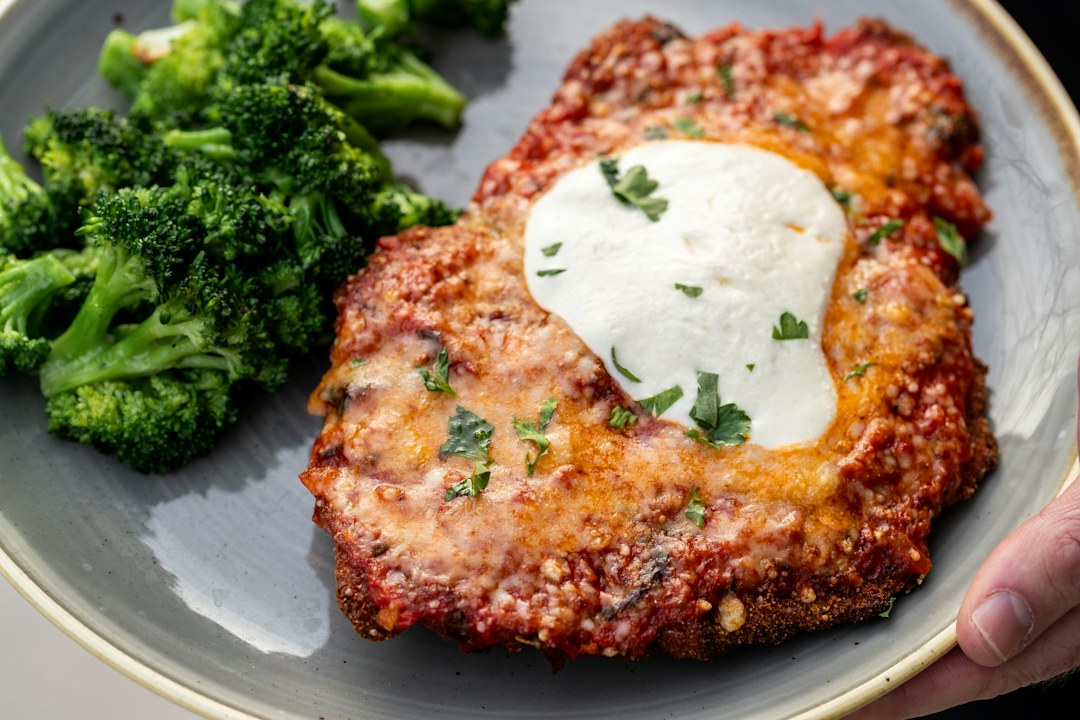
This low-carb chicken Parmesan casserole keeps the tomato, mozzarella, Parmesan, and Italian-herb flavors of chicken Parmesan while leaving out pasta and traditional breading. It starts with cooked chicken, so prep is mostly layering, stirring the ricotta mixture, and adding a crisp almond-flour and Parmesan topping.
The casserole answers a practical weeknight need: a family-sized dinner that can use rotisserie or leftover chicken without frying individual cutlets. Spinach adds vegetables and catches the sauce, while ricotta keeps the chicken moist. Choose a no-added-sugar marinara and serve the casserole with a green vegetable or salad for a lower-carbohydrate meal.

How this casserole stays flavorful without pasta or breading
Cooked chicken can dry out when reheated, so it is layered between marinara and a seasoned ricotta mixture. The sauce supplies moisture, and the cheese melts around the chicken instead of sitting only on top. Baby spinach wilts under the hot filling and keeps the dish from feeling like a pan of meat and cheese alone.
For a crisp contrast without breadcrumbs, almond flour is mixed with finely grated Parmesan and a small amount of olive oil. The topping becomes lightly golden rather than deeply crunchy, but it adds texture without requiring a separate frying step. If nuts are not suitable for your household, the casserole also works with a plain Parmesan top.
For another low-carb Italian-style dinner, try Parmesan Turkey Zucchini Boats. The Garlic Shrimp Zucchini Noodles are a faster skillet option, while Chicken and Stuffing Casserole Without Canned Soup is a classic comfort-food alternative.
Low-Carb Chicken Parmesan Casserole
Prep: 15 minutes Cook: 30 minutes Total: 45 minutes Yield: 8 servings
Ingredients
- 4 cups shredded or chopped cooked chicken
- 2 cups no-added-sugar marinara sauce, divided
- 5 ounces baby spinach, roughly chopped
- 1 cup whole-milk ricotta cheese
- 1 large egg
- 1 teaspoon Italian seasoning
- 1/2 teaspoon garlic powder
- 1/4 teaspoon red pepper flakes, optional
- 1/4 teaspoon black pepper
- 2 cups shredded low-moisture mozzarella cheese, divided
- 3/4 cup finely grated Parmesan cheese, divided
- 1/3 cup almond flour
- 1 tablespoon olive oil, plus more for the dish
- 2 tablespoons chopped fresh basil, optional
Directions
- Heat the oven to 375°F. Lightly oil a 9-by-13-inch baking dish.
- Spread 3/4 cup marinara sauce across the bottom of the dish. Add the chopped spinach in an even layer, then scatter the cooked chicken over the spinach.
- In a medium bowl, stir the ricotta, egg, Italian seasoning, garlic powder, red pepper flakes, black pepper, 1/2 cup mozzarella, and 1/4 cup Parmesan until combined.
- Spoon small dollops of the ricotta mixture evenly over the chicken. Spoon the remaining marinara over the top, then add the remaining 1 1/2 cups mozzarella.
- In a small bowl, mix the almond flour, remaining 1/2 cup Parmesan, and 1 tablespoon olive oil with a fork until evenly moistened. Sprinkle the crumbs over the mozzarella.
- Bake uncovered for 25 to 30 minutes, until the edges bubble and the center reaches 165°F on a food thermometer. If you want more color, broil for 1 to 2 minutes while watching closely.
- Rest the casserole for 10 minutes so the layers settle. Sprinkle with basil, if using, and cut into 8 portions.
Choosing the chicken and marinara
Use chicken that is already fully cooked and still within its safe refrigerated storage window. Rotisserie chicken, simply seasoned baked breasts or thighs, and poached chicken all work. Remove skin and bones, then chop or shred the meat into bite-size pieces. A mix of light and dark meat gives the most forgiving texture, but breast meat works when it is well coated with sauce.
Marinara varies widely in sodium and added sugar. Read the label and choose a sauce whose tomato, garlic, and herb flavor you enjoy, because it seasons the entire dish. “No added sugar” is a useful shopping cue, but it does not mean the sauce contains zero naturally occurring carbohydrate from tomatoes.
Tips for a casserole that is saucy, not watery
- Dry the spinach: If the leaves were washed, spin or pat them dry. Surface water dilutes the sauce as the spinach wilts.
- Use low-moisture mozzarella: Fresh mozzarella releases more liquid and can make the top watery. Shred a block or use packaged low-moisture shreds.
- Do not add cold frozen spinach directly: Thaw it completely and squeeze it very dry before substituting; use about 8 ounces frozen spinach for the 5 ounces fresh.
- Let it rest: Ten minutes gives the hot cheese and sauce time to thicken, making cleaner portions and reducing liquid on the plate.
- Measure the center: Because the chicken is cooked, the casserole is reheating rather than cooking raw poultry. FoodSafety.gov lists 165°F for casseroles and leftovers; check the coolest spot near the center.
Useful variations
- Nut-free topping: Omit the almond flour. Combine the reserved Parmesan with 1 teaspoon olive oil and sprinkle it over the mozzarella.
- Zucchini layer: Sauté 2 cups diced zucchini until its moisture cooks off, then layer it over the spinach. Adding raw zucchini can water down the casserole.
- Mushroom version: Brown 8 ounces sliced mushrooms in a skillet before adding them. Cook until the pan looks dry.
- Spicier sauce: Increase the red pepper flakes to 1/2 teaspoon or use an arrabbiata-style marinara.
- Individual portions: Divide the mixture among eight lightly greased ramekins. Place them on a sheet pan and begin checking after 18 minutes.
Make-ahead instructions
Assemble the casserole through the mozzarella layer up to 1 day ahead. Cover and refrigerate the almond-flour topping separately so it stays dry. Let the baking dish stand at room temperature only while the oven heats, add the topping, and bake. A cold casserole may need 5 to 10 extra minutes to reach 165°F in the center.
For a freezer meal, assemble in a freezer-safe dish without the topping, wrap tightly, and freeze for up to 2 months for best quality. Thaw overnight in the refrigerator, add the topping, and bake as directed. Avoid moving a very cold glass dish directly into a hot oven; follow the dish manufacturer’s thermal-shock guidance.
Storage and reheating
Refrigerate leftovers in shallow covered containers within 2 hours. Use them within 3 to 4 days. FoodSafety.gov recommends reheating leftovers to 165°F. Microwave individual portions in short intervals or cover and warm them in a 325°F oven until hot in the center.
Freeze cooled portions for up to 2 months for best texture. Thaw in the refrigerator before reheating. The ricotta may release a little moisture after freezing, but a covered oven reheat and a brief uncovered finish help the surface recover.
Frequently asked questions
Is this casserole keto?
It is lower in carbohydrates than pasta-based chicken Parmesan, but “keto” depends on a person’s daily targets and the exact marinara and dairy brands used. The nutrition below is an estimate. Check your ingredient labels and calculate with your chosen products if a specific carbohydrate limit matters.
Can I use raw chicken?
This recipe is written for cooked chicken. Raw chicken would release extra liquid and require a different baking time, so it should not be substituted without changing the method. Cook the chicken first to 165°F, then proceed.
Can I leave out ricotta?
Yes. Replace the ricotta mixture with 1 cup small-curd cottage cheese blended smooth with the egg and seasonings. The flavor will be tangier and the filling may contain slightly more moisture.
What should I serve with it?
Good lower-carbohydrate sides include roasted broccoli, green beans, a lemony salad, sautéed zucchini, or garlic mashed cauliflower. Bread or pasta can be offered separately for family members who want it without changing the casserole.
Why did the casserole turn watery?
The usual causes are wet spinach, fresh mozzarella, uncooked watery vegetables, or cutting immediately after baking. Dry the ingredients, use low-moisture cheese, pre-cook optional vegetables, and allow the 10-minute rest.
Estimated nutrition
Estimated per 1/8 casserole: 370 calories, 10 g carbohydrate, 34 g protein, 22 g fat, 10 g saturated fat, 2 g fiber, 5 g sugar, and 690 mg sodium. This estimate uses typical no-added-sugar marinara and full-fat dairy. Brands, rotisserie-chicken seasoning, and substitutions can change the values substantially.
Leave a Reply