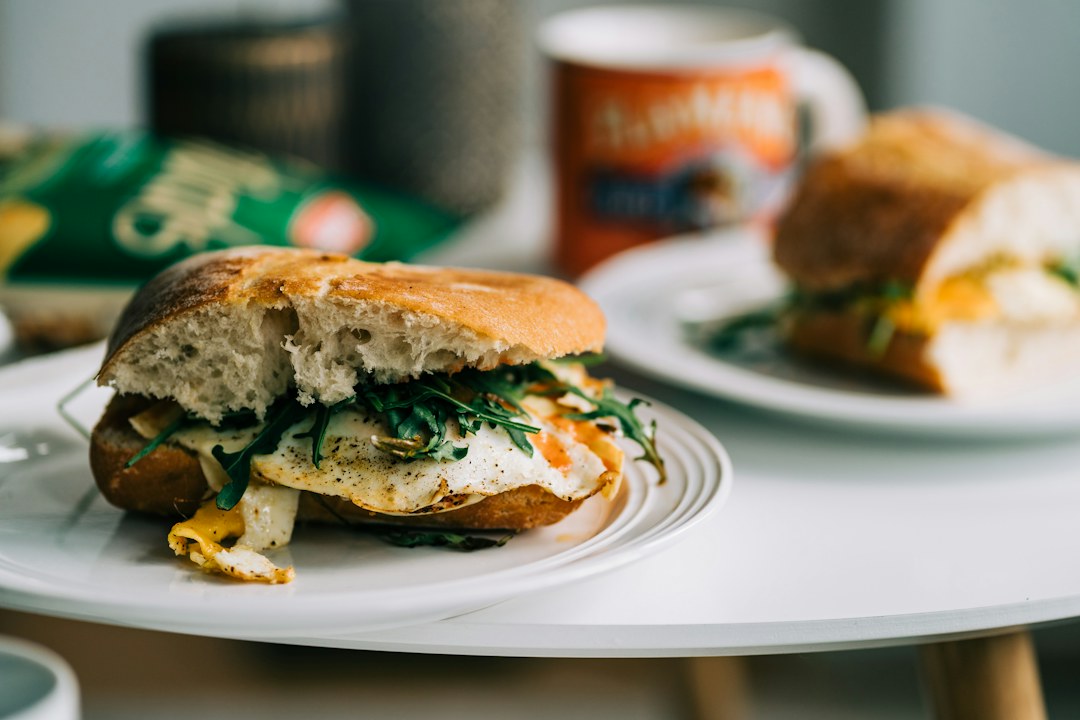
These sheet pan eggs for breakfast sandwiches bake into one even, sliceable layer instead of requiring several batches at the stove. Cottage cheese is blended into the eggs for a tender texture, while spinach, red bell pepper, and cheddar add color and savory flavor without making the slab difficult to cut.
The recipe yields 12 squares sized for English muffins, bagels, biscuits, wraps, or breakfast bowls. Make them for a crowd, refrigerate portions for weekday breakfasts, or freeze the cooled squares individually. The nutrition estimate covers the egg square only, so you can choose bread, cheese, or other sandwich fillings that fit your household.

Why sheet-pan eggs work for meal prep
A rimmed half-sheet pan spreads the egg mixture into a broad, shallow layer, so it cooks quickly and can be divided into consistent portions. Blending the cottage cheese removes visible curds and distributes its moisture throughout the eggs. The finished squares are sturdy enough to stack in a sandwich but remain softer than an overcooked omelet.
Finely chopping the vegetables is important. Large or watery pieces can create weak spots and release moisture during storage. Spinach and bell pepper work well because they need little preparation, but they should be dry before they go into the pan. Shredded low-moisture cheese melts evenly and helps bind the surface.
For another freezer-friendly egg option, see Make-Ahead Vegetable Egg Muffins. Pair the egg squares with Greek Yogurt Bagels Without Yeast, or serve them beside Sheet Pan Pancakes with Frozen Blueberries for a larger brunch.
Sheet Pan Eggs for Breakfast Sandwiches
Prep: 10 minutes Cook: 20 minutes Total: 30 minutes Yield: 12 egg squares
Ingredients
- 16 large eggs
- 1 cup 2% or whole-milk cottage cheese
- 1 teaspoon fine salt
- 1/2 teaspoon black pepper
- 1/2 teaspoon garlic powder
- 1 cup packed baby spinach, finely chopped and patted dry
- 1/2 cup finely diced red bell pepper
- 1 cup shredded sharp cheddar cheese
- Nonstick cooking spray or 1 tablespoon olive oil, for the pan
Directions
- Heat the oven to 350°F. Thoroughly grease an 18-by-13-inch rimmed half-sheet pan. Line it with parchment paper, leaving a small overhang on two sides, then lightly grease the parchment and exposed pan edges.
- Add the eggs, cottage cheese, salt, black pepper, and garlic powder to a blender. Blend for 20 to 30 seconds, just until smooth and lightly frothy. Do not keep blending once the curds disappear.
- Set the prepared pan on the extended oven rack before filling if carrying a full pan of liquid feels unsteady. Pour the egg mixture into the pan and spread it gently toward the corners.
- Scatter the spinach, bell pepper, and cheddar evenly over the surface. Use a fork or spatula to nudge some of the toppings just beneath the egg without scraping the parchment.
- Carefully slide the rack into the oven. Bake for 18 to 22 minutes, rotating the pan after 12 minutes, until the center no longer jiggles and an instant-read thermometer inserted in the center reaches 160°F.
- Cool in the pan for 10 minutes. Run a thin spatula around any exposed edges, lift the egg slab using the parchment, and transfer it to a cutting board.
- Cut into 12 equal squares. Serve warm, cool for storage, or fit the portions to your preferred sandwich bread.
Pan size matters
This recipe is written for an 18-by-13-inch rimmed half-sheet pan with sides about 1 inch high. A flat cookie sheet is unsafe because the liquid egg can run off the edge. A smaller pan makes the layer thicker and changes the baking time; a larger pan can produce thin, dry edges before the center is ready.
If you have only a 9-by-13-inch baking dish, halve the recipe and begin checking after 16 minutes. Do not pour the full batch into that smaller dish and rely on the listed time. Whatever pan you use, place it level in the oven and avoid warped bakeware that could make the egg layer noticeably uneven.
Tips for tender eggs that release cleanly
- Grease both surfaces: Grease the pan before adding parchment so the paper stays in place, then grease the paper so the egg releases.
- Keep vegetables dry: Spin washed greens dry and blot the bell pepper. Excess water can make the cooked eggs weep during storage.
- Blend briefly: The goal is a smooth cottage-cheese mixture, not a large volume of foam. Too much air can make the eggs puff dramatically and then shrink.
- Pull at 160°F: FoodSafety.gov lists 160°F for egg dishes. Baking far beyond that point can make the squares rubbery.
- Cool before wrapping: Warm eggs release steam. Wrapping them immediately traps moisture and can make sandwich bread soggy.
How to build breakfast sandwiches
Toast split English muffins, biscuits, or bagels lightly so they resist moisture after storage. Add one cooled egg square and a slice of cheese. For a meat version, add a fully cooked sausage patty, ham, or cooked bacon. Let every component cool before assembly.
For refrigerator sandwiches, wrap individually and use within 3 to 4 days. For freezer sandwiches, wrap first in parchment and then in foil or place them in a freezer bag. Label with the date and freeze for up to 2 months for best quality. The egg squares can also be frozen alone, which lets you choose fresh bread on the day you eat them.
Useful variations
- Spinach and feta: Replace the cheddar with 3/4 cup crumbled feta and add 1 tablespoon chopped dill.
- Broccoli cheddar: Use 1 cup very finely chopped cooked broccoli that has been cooled and patted dry.
- Southwest: Replace the bell pepper with 1/2 cup well-drained chopped green chiles and use pepper Jack cheese.
- Egg-white blend: Replace 6 whole eggs with 1 1/2 cups liquid egg whites. The squares will be slightly firmer and lighter in color.
- Plain sandwich base: Omit the vegetables and use 3/4 cup cheese for a neutral egg layer that pairs with many fillings.
Storage, freezing, and reheating
Refrigerate cooked egg squares in a shallow covered container within 2 hours. FoodSafety.gov lists 3 to 4 days for baked egg casseroles. Separate stacked portions with parchment so they lift out cleanly. Reheat until steaming hot; leftovers should reach 165°F.
To freeze the squares alone, cool completely, arrange them on a parchment-lined tray until firm, then transfer them to a freezer bag. Freeze for up to 2 months for best texture. Thaw overnight in the refrigerator or microwave from frozen in short intervals. Covering the square with a damp paper towel helps limit dry edges.
For an assembled sandwich, remove foil before microwaving. Wrap the sandwich in a paper towel and heat at reduced power first so the center warms without toughening the egg. Finish at full power in 15- to 20-second intervals. Microwave times vary with the bread, fillings, and appliance.
Frequently asked questions
Do the eggs taste like cottage cheese?
The cottage cheese adds a mild dairy tang, but cheddar, vegetables, and seasoning lead the flavor. Blending removes the curd texture. Use a plain cottage cheese rather than a flavored variety.
Can I whisk instead of using a blender?
Yes, but small curds will remain. For a smoother result without a blender, press the cottage cheese through a fine-mesh strainer and whisk it thoroughly with the eggs.
Why did the eggs stick to the parchment?
Parchment is not always completely nonstick with eggs. Grease it lightly, including the corners, and let the slab cool for 10 minutes before lifting. Peeling the paper away from the egg is often easier than pulling the egg away from the paper.
Can I add raw sausage or bacon?
No. Meat additions must be fully cooked, drained, and cooled before they are scattered over the egg mixture. Raw meat would require a different time and could release unsafe juices into the pan.
Why is there liquid after refrigeration?
Wet vegetables, fresh mozzarella, or wrapping the eggs while warm can cause weeping. Use dry vegetables, low-moisture cheese, and cool every portion before sealing.
Estimated nutrition
Estimated per egg square: 150 calories, 3 g carbohydrate, 12 g protein, 10 g fat, 5 g saturated fat, 0.5 g fiber, 2 g sugar, and 390 mg sodium. This estimate excludes bread and other sandwich fillings; cottage cheese and cheddar brands will change the values.
Leave a Reply